
For far too long, pest control in Australian businesses has followed a familiar, frustrating pattern: ignore the problem until it becomes impossible to ignore, call an exterminator, apply chemicals, and repeat. This reactive cycle is costly, disruptive, and — in an era of heightened environmental awareness and stricter food safety regulations — increasingly untenable.
Across Sydney, forward-thinking businesses are abandoning this outdated approach in favour of Integrated Pest Management (IPM), a proactive, evidence-based framework that treats pest control as an ongoing discipline rather than an emergency response. Here’s what you need to know about IPM and how you can apply it for your business.
What Is Integrated Pest Management?
Integrated Pest Management is a comprehensive, multi-layered approach to pest control that combines biological, physical, cultural, and chemical methods in a coordinated strategy.
Rather than defaulting to pesticide application as the first and only line of defence, IPM prioritises understanding pest behaviour, identifying vulnerabilities in a premises, and addressing the root causes that allow infestations to take hold in the first place.
The core philosophy of IPM is straightforward: prevention is always preferable to cure. By monitoring conditions continuously, identifying early warning signs, and implementing targeted interventions, businesses can manage pest populations before they reach economically or hygienically damaging levels.
The True Cost of Reactive Pest Control
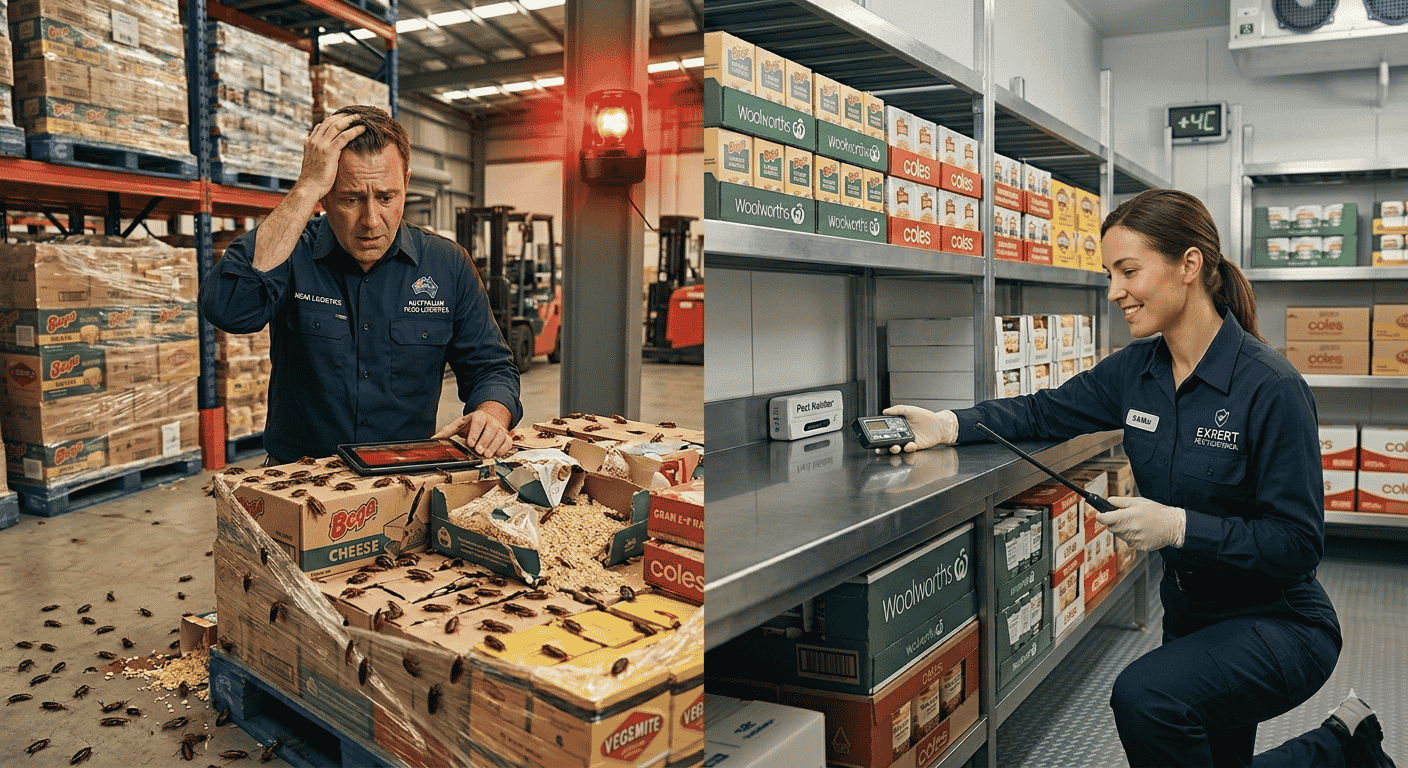
Many businesses underestimate the full cost of a reactive approach until they are squarely in the middle of a crisis. An infestation discovered during a health inspection, a rodent spotted by a customer, or a cockroach problem that has quietly spread through a commercial kitchen. These events carry consequences that go well beyond the price of an emergency treatment.
Consider the compounding costs: emergency pest control services come with premium pricing. Stock contaminated by pests must be discarded. Premises may need to close temporarily for treatment, resulting in direct revenue loss.
In the hospitality and food service industries — sectors that employ hundreds of thousands of Sydneysiders — a single pest-related incident can trigger a suspension of trading licences, trigger regulatory scrutiny, and, in the age of social media, cause reputational damage that is extraordinarily difficult to undo.
A 2023 survey by Food Standards Australia New Zealand found that pest activity remains one of the leading causes of food safety non-compliance across commercial food businesses. These are not isolated incidents; they are the predictable consequence of treating pest management as an afterthought.
Why Sydney's Business Environment Demands a Proactive Stance
Sydney presents a particularly challenging environment for pest management. The city's warm, humid climate — especially through the summer months — creates ideal breeding conditions for cockroaches, rodents, ants, and flies.
Urban density means that businesses share walls, drainage infrastructure, and loading docks with dozens of neighbours, any of whom may inadvertently provide a corridor for pests to migrate. Meanwhile, the city's ongoing construction boom consistently disturbs subterranean habitats, pushing rodents and other pests into established commercial premises.
Regulatory pressure is also intensifying. The NSW Food Authority enforces rigorous standards under the Food Act 2003, and local councils conduct regular inspections of commercial kitchens, hospitality venues, and food retail outlets.
Businesses that cannot demonstrate an active, documented pest management programme face fines, public disclosure of compliance failures, and, in serious cases, immediate closure orders.
IPM directly addresses these pressures. Because it involves regular site inspections, detailed monitoring logs, and documented intervention records, it provides businesses with the paper trail that regulators expect to see. Safe Spray can help you get started along this pest management path.
The Pillars of an Effective IPM Programme
A well-designed IPM programme for a Sydney business typically rests on five key pillars:
1. Site Assessment and Risk Analysis The programme begins with a thorough audit of the premises — identifying entry points, harborage areas, moisture sources, and food storage vulnerabilities. This audit forms the baseline against which all subsequent monitoring is measured.
2. Continuous Monitoring Rather than waiting for a problem to become visible, IPM uses traps, sensors, and scheduled inspections to track pest activity in real time. Monitoring data informs decisions about when and where intervention is needed — and, crucially, when it is not.
3. Prevention and Exclusion Physical measures — sealing gaps around pipes, installing door sweeps, improving waste management protocols, adjusting landscaping near building perimeters — are implemented to deny pests the access and resources they need. These structural and procedural changes often eliminate the need for chemical intervention altogether.
4. Targeted Intervention When pest populations do require active management, IPM favours the least disruptive, most targeted method available. Biological controls, physical traps, and low-toxicity treatments are preferred over broad-spectrum pesticide applications, minimising chemical exposure for staff, customers, and the surrounding environment.
5. Evaluation and Adaptation IPM is not a static programme. Data gathered through monitoring is regularly reviewed, and the strategy is adjusted in response to seasonal changes, new construction in the vicinity, shifts in business operations, or emerging pest pressures.
The Commercial Case for IPM
Beyond regulatory compliance, IPM makes compelling commercial sense. Studies consistently show that proactive pest management programmes reduce overall pest control expenditure over time, primarily by avoiding the high costs associated with emergency interventions and infestation remediation. Staff productivity is maintained because there are no unplanned closures. Customer trust is preserved because the premises consistently meets hygiene expectations.
For businesses operating in sectors where reputation is everything — restaurants, hotels, childcare centres, healthcare facilities, and food manufacturing — IPM is not a luxury. It is a core component of professional operations. Get in touch with Safe Spray to learn more.
Choosing the Right IPM Partner in Sydney
Not all pest control providers are equal, and the shift to IPM requires a partner who offers more than a van full of chemicals. Partner with Safe Spray’s professional pest control team. Call 1300 562 053.