

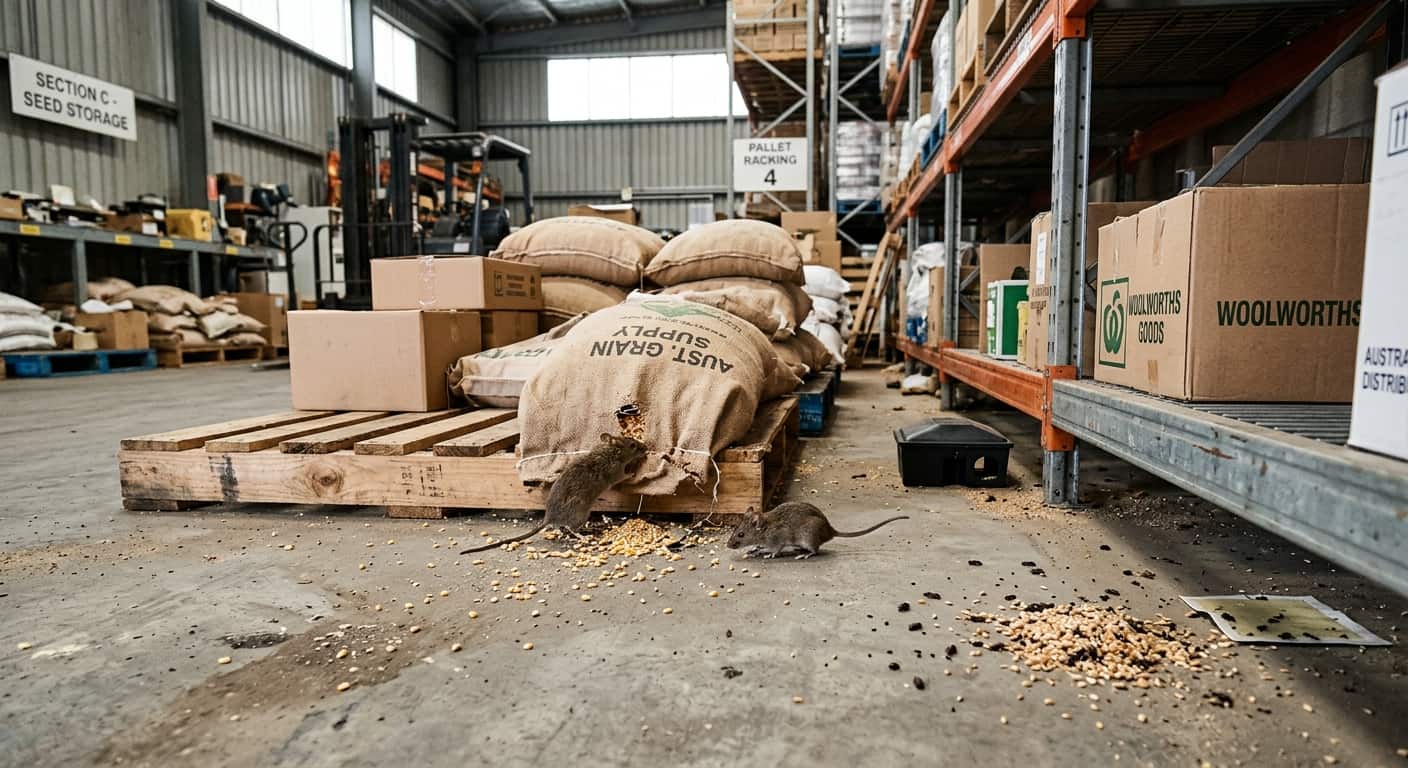
When the calendar flips from August to September and temperatures across New South Wales start creeping upward, warehouse managers face one of their most demanding operational challenges of the year… the spring pest surge.
It happens every year, and yet it still catches businesses off guard. Rodents that spent winter sheltering inside wall cavities and subfloor spaces become emboldened by warmer nights and expand their territory. Stored product insects (SPIs), sluggish over the cooler months, respond rapidly to rising temperatures with accelerated breeding cycles.
With Australia's spring also bringing increased humidity along the east coast, conditions inside loading docks, racking aisles, and storage areas can quickly become ideal for infestation — often invisibly.
For distribution centres, food manufacturers, 3PL operators, and wholesale businesses across NSW, spring isn't just a busy period for trade. It's a critical window for pest management.
Why Spring Is the Highest-Risk Season
Norway rats and roof rats — the two most common species affecting NSW warehouses — hit their peak breeding cycle in spring. A single breeding pair can produce up to 60 offspring in a year, and with a gestation period of just 21 days, populations can explode inside a facility within weeks. By the time droppings or gnaw marks become visible, the infestation is already well established.
For stored product insects, the risk is equally insidious. Key species in the Australian warehouse environment include the warehouse beetle (Trogoderma variabile), Indian meal moth (Plodia interpunctella), rust-red grain beetle (Cryptolestes ferrugineus), and the sawtoothed grain beetle (Oryzaephilus surinamensis). Of particular concern is the khapra beetle (Trogoderma granarium) — a high-priority biosecurity threat that can survive for years without food and is notoriously difficult to eradicate once established.
As temperatures rise above 20°C and humidity climbs, SPI life cycles compress dramatically. What takes weeks in winter can take days in spring. A single moth or beetle arriving in an incoming pallet can seed an infestation that spreads through thousands of dollars of stock before it's visible to the naked eye.
Three Ways Pests Enter Your Warehouse
The exterior perimeter. Drains, vegetation, bin enclosures, and fence lines all serve as pest reservoirs. Spring growth means more vegetation — which means more harborage. Loading dock aprons are particularly high-risk: a gap of just 6mm is sufficient for a mouse to enter, 12–15mm for a rat.
Inbound goods and packaging. This is the entry point that catches operators off guard most often. SPIs, cockroaches, and even rodents arrive inside facilities via cardboard cartons, recycled pallets, bulk dry goods such as grain and flour, and shipping containers that haven't been properly inspected or fumigated. Once inside, they find exactly what they need to breed: warmth, shelter, and food.
The building itself. Pallet racking creates a near-perfect ecosystem for pests. Gaps between racking uprights and floor slabs, the darkness at the top of high-bay racking, roof voids, lunchrooms, compactor zones, and floor drains all provide harborage that remains largely invisible during normal operations.
The Cost of Getting This Wrong
Fines for major food safety breaches in Australia can exceed $100,000. For warehouse operators maintaining certification against AIB, BRC, SQF, or HACCP audit standards, documented pest management is not optional. Auditors look for station logs, trend data, chemical registers, and corrective action records. A single rodent dropping found during an unannounced audit can trigger a non-conformance that threatens your certification and your contracts with major retail and brand partners.
Beyond compliance, the operational costs are direct. SPI larvae found in bulk stored goods typically require the entire affected lot to be condemned — a write-off that can run to tens of thousands of dollars in a single event. Rodents gnawing through electrical wiring create a serious fire risk. And for 3PL operators, a pest event on a client's stock can end that relationship permanently.
What to Do Before Spring Arrives
Audit your perimeter and building envelope. Walk your full perimeter before the end of winter. Seal gaps around utility entry points and conduit runs, replace damaged dock door sweeps and dock seals, cut back vegetation within 500mm of walls, and address any drainage issues that pool water near the building.
Review your monitoring network. If your warehouse layout has changed — new racking, a relocated receiving area, a new compactor — your bait station and pheromone trap placement should reflect it. SPI pheromone traps should cover all inbound goods areas and racking aisles where susceptible product is stored.
Tighten inbound goods protocols. Train receiving staff to check outer cartons for silken webbing, frass, or live insects; pallets for gnaw marks and rodent smear marks; and bulk goods for unusual odours, clumping, or movement. Any suspect consignment should be quarantined before it enters storage.
Engage a licensed commercial pest controller — before spring arrives. A reactive approach is significantly more expensive and disruptive than pre-season prevention. A professional program should cover exterior perimeter control, inbound goods monitoring, and interior surveillance — with full audit-ready documentation at every visit.
Early Warning Signs Your Team Should Know
Shift leads, dock staff, and warehouse supervisors are your first line of detection. Train them to report immediately: droppings, smear marks, or gnaw marks for rodents; silken webbing, frass, larvae, or adult insects near stored goods for SPIs. Early detection is the single most cost-effective pest management tool available to any warehouse operation.
How Safe Spray Can Help
At Safe Spray Pest Control, we work with warehouse operators, logistics providers, food manufacturers, and 3PL businesses across New South Wales to deliver pest management programs that hold up under audit and protect your stock.
Our warehouse programs include pre-season inspections, perimeter bait station installation, SPI pheromone trap placement and catch analysis, inbound goods risk reviews, and full service documentation aligned to HACCP, BRC, SQF, and AIB requirements. We also provide emergency response for active infestations, with after-hours availability.
Spring doesn't wait — and neither should your pest program. Contact Safe Spray Pest Control today to arrange a pre-spring warehouse inspection for your NSW facility.
Safe Spray Pest Control — Licensed Commercial Pest Management Specialists, Serving NSW and Nearby Regions.